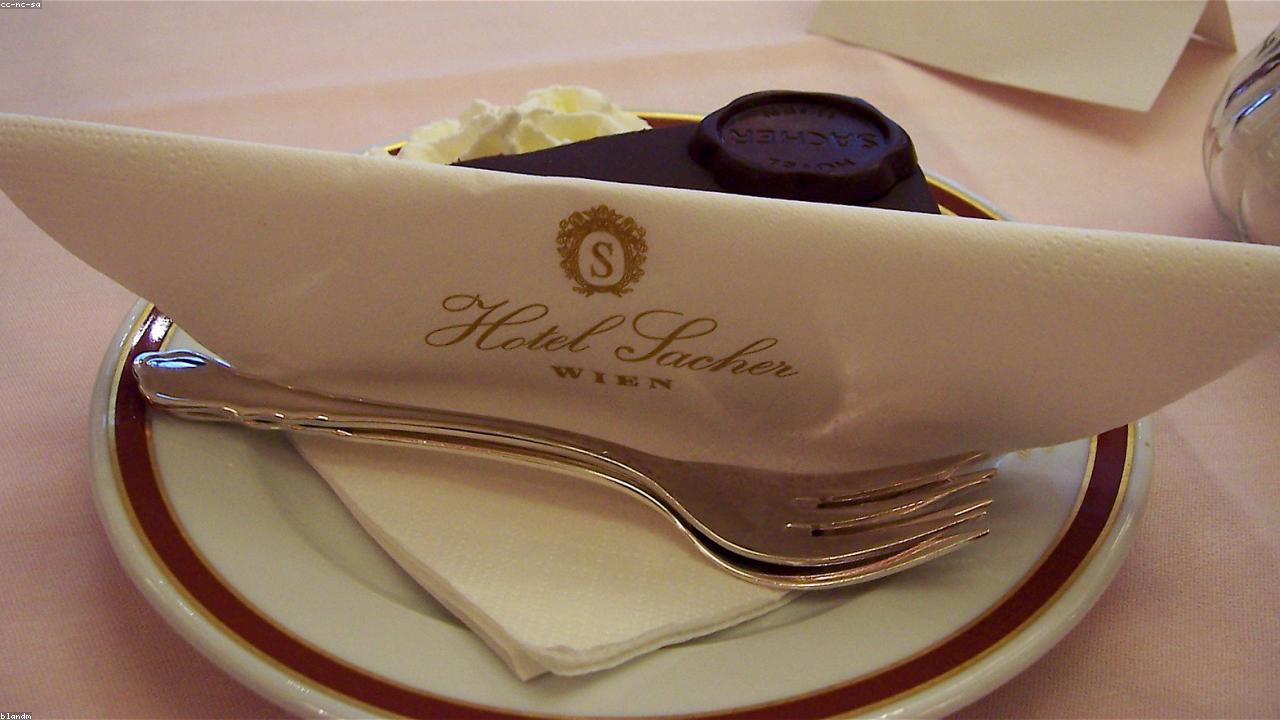
Few cities have built an entire culture around cake the way Vienna has. Austrian pastries — and the Viennese cakes at their centre — are inseparable from the Kaffeehaus, the coffee house where a single slice of Torte, a strong coffee and an afternoon to spare are treated as a complete ritual rather than a snack.
This is baking inherited from an imperial capital, refined for the marble-topped tables of the nineteenth century and still served with white-gloved formality today. Below is a guide to that tradition, from the great tortes to the homely strudel, with a link to the deep-dive on Vienna's most famous cake.
The Viennese coffee house: a UNESCO institution
The Viennese Kaffeehaus is so central to the city's identity that UNESCO inscribed it on its list of intangible cultural heritage. The custom is unmistakable: marble tables, bentwood Thonet chairs, a waiter in formal dress, newspapers on wooden frames, and the unspoken right to linger for hours over a single cup.
The coffee itself comes with its own dense vocabulary — a Melange (close to a cappuccino), a Kleiner Brauner, an Einspänner crowned with whipped cream — and is always served with a small glass of water. Pastry is the natural partner. This is the stage on which Austrian cakes are meant to be eaten: slowly, in public, with conversation.
Austria's signature cake
One Viennese cake stands above the rest and has its own full deep-dive:
- Sachertorte — a dense, not-too-sweet dark chocolate sponge, brushed with apricot jam and sealed under a glossy poured chocolate glaze. Created in 1832 for Prince Metternich's court and the subject of a famous legal feud over the "Original" recipe, it is the definitive Viennese cake.
Follow the link for its full history and the secret of its mirror-smooth glaze. The rest of this page covers the wider world of Austrian baking.
The Torte tradition
The Torte — a rich, layered cake, typically built on ground nuts or chocolate rather than much flour — is Austria's defining contribution to pastry. Several are landmarks in their own right:
- Linzer Torte — often called the world's oldest named cake, with a recipe dating to at least the early eighteenth century. A spiced, nut-rich shortcrust latticed over redcurrant or raspberry jam.
- Esterházy Torte — alternating layers of almond-and-hazelnut meringue and buttercream, finished with white fondant feathered in the signature chocolate chevron pattern.
- Dobos and Punschkrapfen — sponge-and-buttercream constructions and rum-soaked, pink-glazed petits fours that fill the Konditorei case.
Strudel and the warm desserts
Not all Austrian baking is a chilled torte. The Apfelstrudel is the country's most beloved warm dessert: spiced apples, raisins and breadcrumbs rolled inside a dough pulled so thin a newspaper can be read through it, then baked until crisp and dusted with sugar. The technique — stretching rather than rolling — is closer to phyllo than to puff pastry, a legacy of the Ottoman edge of the old empire.
Alongside it sit the comforting Mehlspeisen, the flour-based sweets of the Austrian kitchen: Kaiserschmarrn, a fluffy shredded pancake caramelised with sugar and served with plum compote; Topfenstrudel filled with sweet curd cheese; and Marillenknödel, apricot dumplings. These are home and inn food as much as café fare.
An imperial legacy on a plate
Austrian pastry carries the fingerprints of an empire that once stretched across Central Europe and brushed the Balkans and northern Italy. That breadth shows on the plate: the pulled dough of strudel echoes Ottoman and Hungarian baking, the chocolate craft reflects long trade links, and dishes such as the Kaiserschmarrn ("the emperor's mess") are literally named for the Habsburg court.
The result is a cuisine of refinement and nostalgia. To eat Austrian pastries properly is to slow down — to order a Melange, claim a marble table and let an afternoon dissolve, exactly as the Kaffeehaus intends.
Frequently asked questions
What is the most famous Austrian pastry?add
The Sachertorte, Vienna's apricot-and-chocolate cake created in 1832, is Austria's most famous bake. Close behind it sit the Apfelstrudel and the Linzer Torte, often cited as one of the oldest named cakes in the world.
What is the difference between a Torte and a cake?add
In Austrian and German baking a Torte is a richer, more structured layered cake, usually built on ground nuts, chocolate or meringue with relatively little flour and bound by buttercream, jam or cream. "Cake" (Kuchen) tends to mean a simpler, plainer everyday bake.
Why is the Viennese coffee house so important?add
The Kaffeehaus is a social institution where you can linger for hours over one coffee, read the papers and eat a slice of cake at an unhurried pace. UNESCO recognises Viennese coffee-house culture as intangible cultural heritage, and it remains the natural setting for Austrian pastries.
Is apfelstrudel made with puff pastry?add
No. Traditional Apfelstrudel uses a strudel dough that is stretched by hand until paper-thin and translucent, closer in spirit to phyllo than to laminated puff pastry. The thin sheet is brushed with butter and wrapped around the spiced apple filling before baking.